What You Get for Under $300
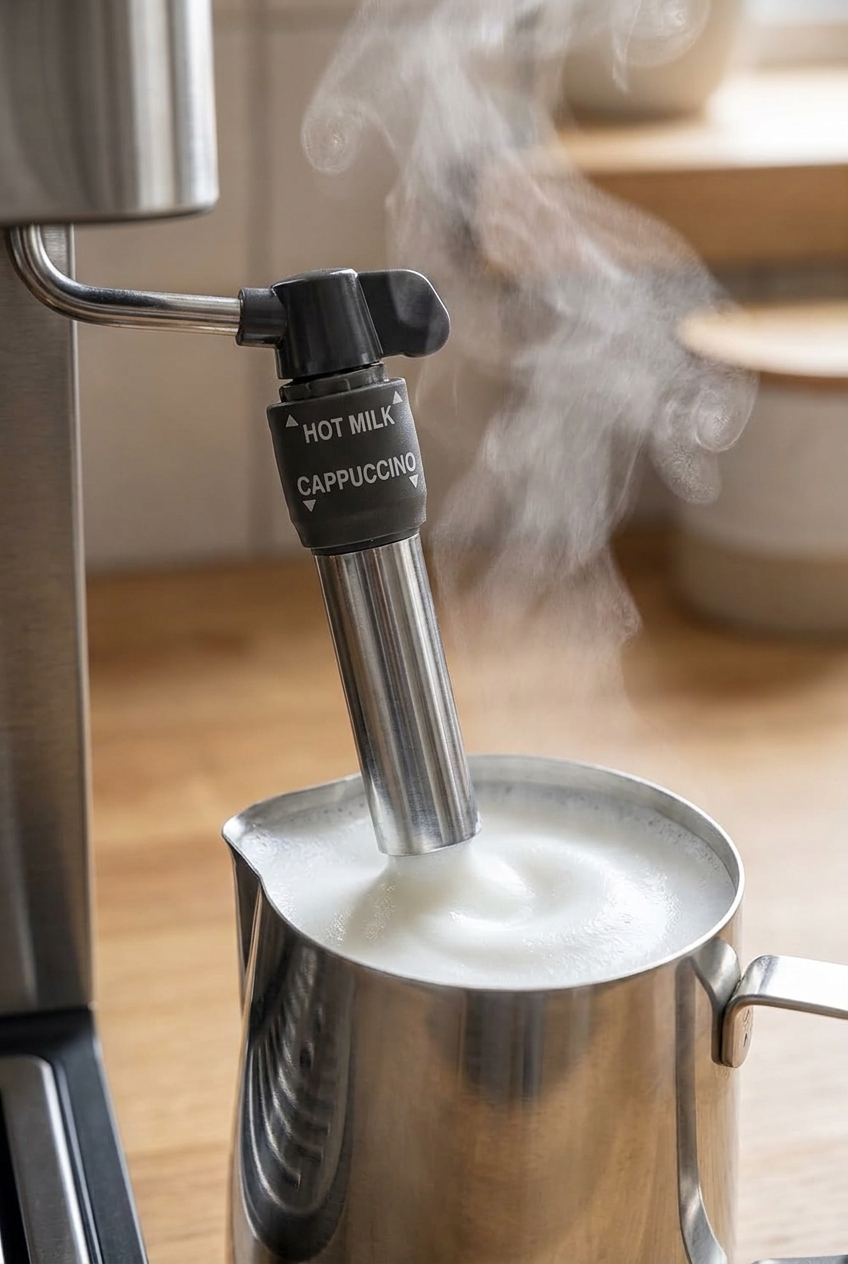
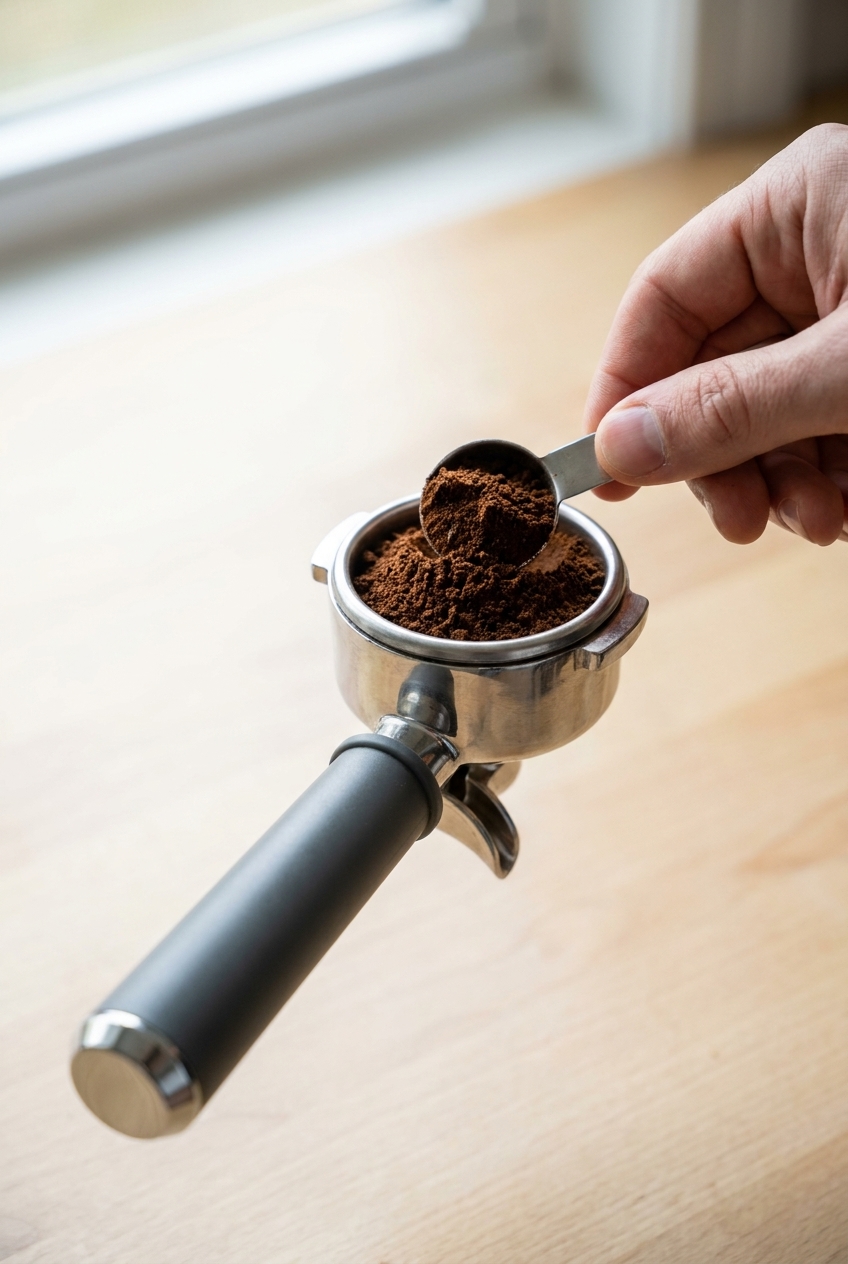
For roughly $100 to $300, you can buy a real espresso machine with a portafilter, a 15 or 20-bar pump, and a steam wand. That is a full step up from pod machines or stovetop moka pots. But you have to be realistic about what this price does not include: no PID temperature control, no dual boiler, and most importantly, no built-in grinder in four out of five machines. The only exception in this list is the Gevi 20-Bar Espresso Machine, which includes a conical burr grinder. For the other four, you will need to buy a separate espresso-capable burr grinder, which adds $70 to $100 to your total cost. The machines in this range use thermoblock or thermocoil heating rather than a heavy brass boiler, which means they heat up fast but can struggle with temperature stability for back-to-back shots. Still, with the right technique and a decent grinder, you can pull a satisfying espresso shot at home.
All five machines listed here are top contenders under $300 based on manufacturer specifications, owner experiences, and real-world performance. We have analysed the specs, user feedback, and common trade-offs so you can make an informed choice.
- ✓ ThermoJet heating reaches optimal temperature in 3 seconds, no waiting.
- ✓ Low-pressure pre-infusion ensures even extraction, reducing channeling.
- ✓ Automatic steam wand delivers microfoam for latte art.
- ✗ No built-in grinder; requires a separate burr grinder for espresso-fine grounds.
- ✗ Price of leaves little room for accessories.
- ✗ Small water tank (34 oz) may need frequent refills.
The Hidden Cost of the Grinder
| Feature | De'Longhi EM400M | CASABREWS 3700 | Breville Bambino | Gevi 20 Bar | CASABREWS CM5418 |
|---|---|---|---|---|---|
| Pump Pressure | 9 bar (consistent, auto-stop) | 20 bar | 15 bar (with pre-infusion low pressure) | 20 bar | 20 bar |
| Water Tank | 35 oz (approx.) | 43.9 oz | 34 oz | 34 oz (approx.) | 34 oz |
| Pressure Gauge | No | No | No | No | Yes |
| Built-in Grinder | No | No | No | Yes (30 settings) | No |
| Best For | Beginners wanting consistent 9-bar shots | Budget buyers who want a large tank | Quality-focused users who want fast heat-up | All-in-one convenience | Users who want to monitor extraction pressure |
Breville Bambino: Fast Heat-Up and Great Steam
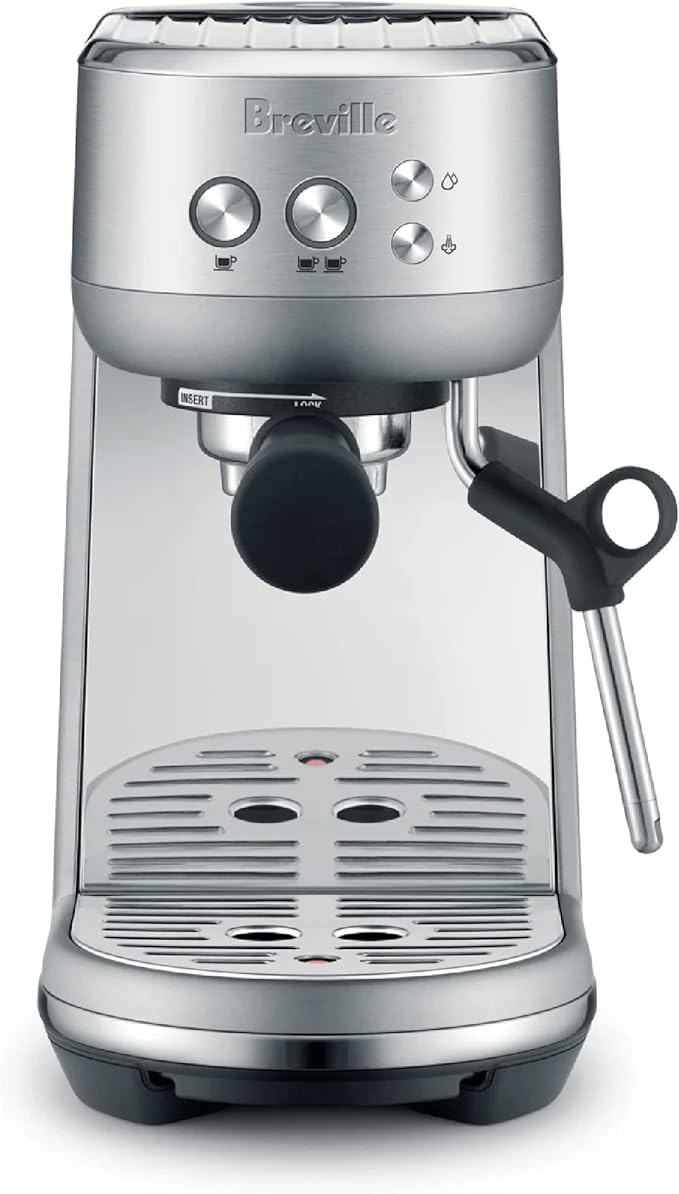
Breville BES450BSS Bambino Espresso
See it on Amazon →The Breville Bambino is the most advanced machine under $300. Its ThermoJet heating system reaches optimal extraction temperature in just 3 seconds, so you do not wait for the machine to warm up. Low-pressure pre-infusion gradually increases pressure at the start of the shot, which helps even extraction and reduces channeling — a big plus for beginners. The automatic steam wand lets you set milk temperature and texture, making it easy to produce microfoam for latte art. However, the Bambino has no built-in grinder and a small 34 oz water tank. It sits at the very top of the entry-level budget, and you will need to spend extra on a separate burr grinder. Buyers consistently praise its rapid 3-second heat-up, shot quality, and steam performance, while noting the small water tank and lack of an integrated grinder.
Gevi 20 Bar: All-in-One Convenience
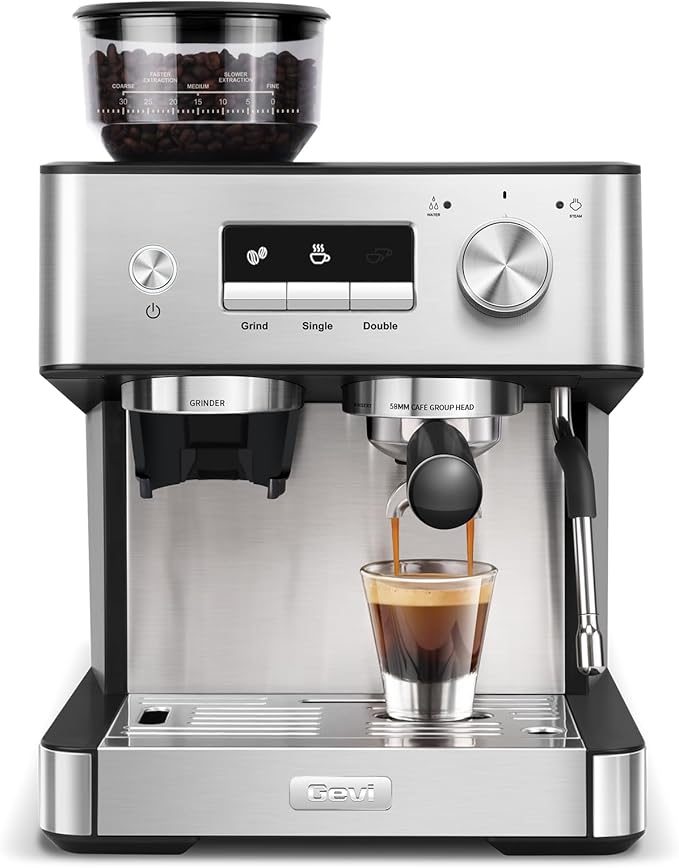
Gevi 20 Bar Espresso
See it on Amazon →The Gevi is the only machine in this list that includes a built-in conical burr grinder with 30 adjustable grind settings. That means you can go from beans to espresso without buying a separate grinder, saving you at least $70. The 20-bar Italian pump is typical for this price range, and the adjustable brew strength and temperature give you some control over your shot. The steam wand works for milk texturing, though reviews suggest it is not as powerful as the Breville's. The Gevi receives enthusiastic owner praise, standing out as the most versatile all-in-one option in this price bracket. The trade-off is that the grinder adds a bit of complexity and the machine is bulkier than the compact Bambino. If you want a single appliance that does everything, this is your best choice.
De'Longhi EM400M: Consistent 9-Bar Extraction
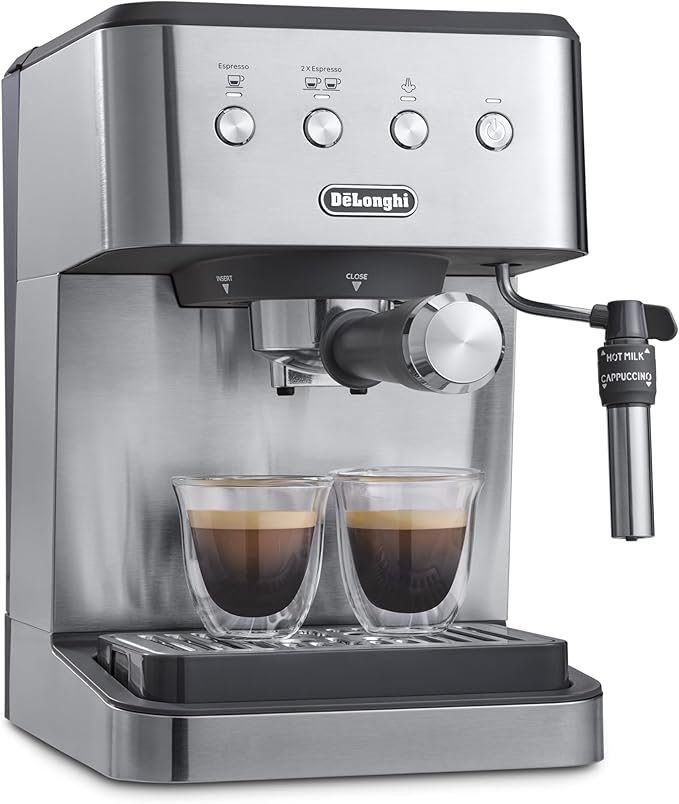
De'Longhi EM400M Classic Espresso
See it on Amazon →The De'Longhi EM400M offers a straightforward, no-nonsense approach with a consistent 9-bar pump and an auto-stop function that stops extraction when the desired volume is reached. Thermoblock technology heats up quickly and holds temperature reasonably well for a few shots. The steam wand can handle milk alternatives and produces both silky and frothy textures. It represents a solid, reliable choice in the sub-$300 tier. The machine lacks a pressure gauge and built-in grinder, but its 9-bar extraction provides dependable espresso. Buyers appreciate its simplicity and durability, though some note the steam wand requires patience compared to higher-powered machines. This is a great entry point for someone who wants a real espresso machine without overspending.
CASABREWS 3700: Most Affordable with a Large Tank
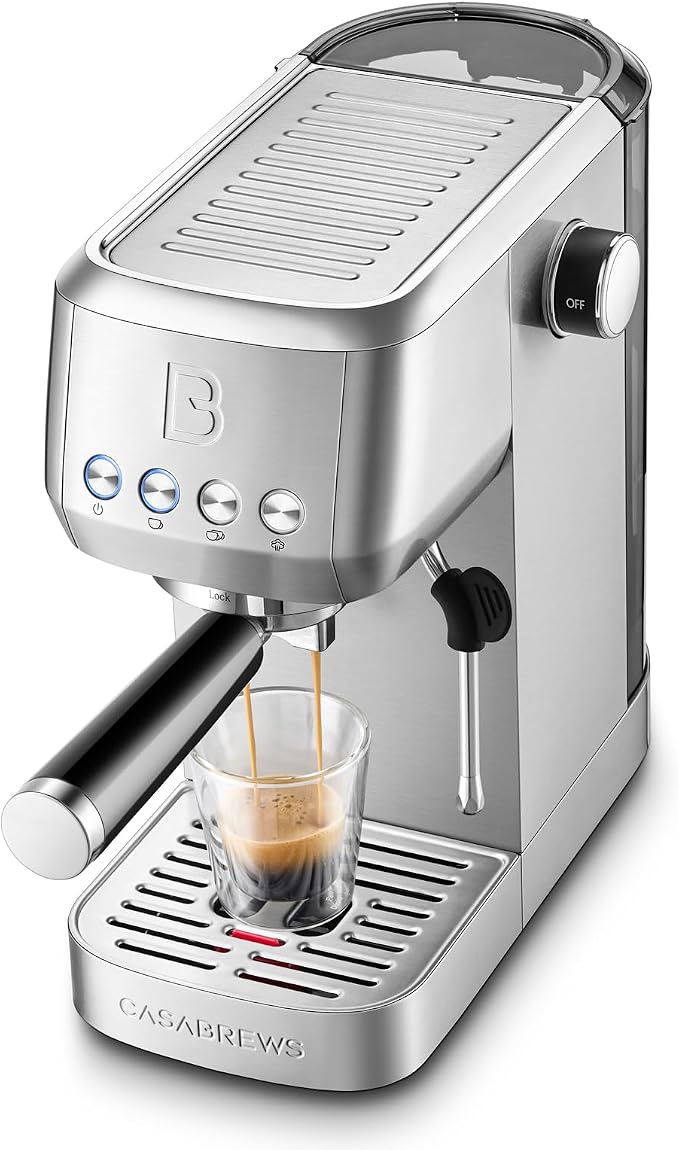
CASABREWS 3700 Essential Stainless
See it on Amazon →The CASABREWS 3700 is the most affordable machine on this list, offering an accessible entry point with a 1350 W heating system and a steam wand. The standout feature is the 43.9 oz detachable water tank, the largest here, so you can make several drinks without refilling. The stainless steel body is compact and durable. However, at this price point, you get less temperature stability and no pressure gauge or grinder. Buyers appreciate its accessible price and large water tank, though some report that the steam wand requires practice to achieve microfoam and the pump can be noisy. If your budget is very tight, this machine will get you started, but you will still need a grinder.
CASABREWS CM5418: Built-In Pressure Gauge
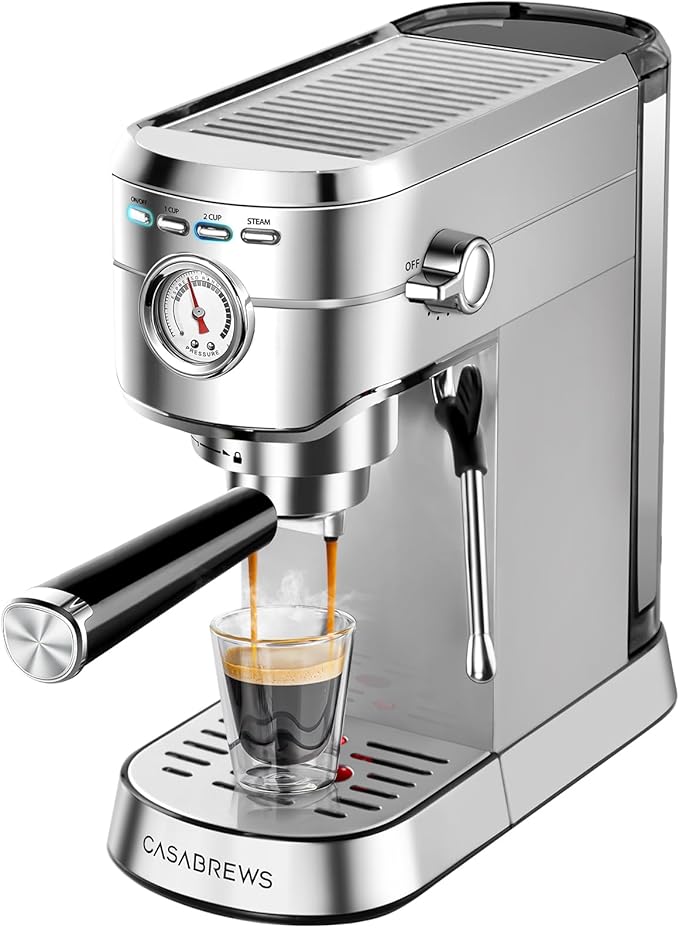
CASABREWS CM5418 Compact Espresso
See it on Amazon →The CASABREWS CM5418 is unique in this price range because it has a built-in pressure gauge on the front that shows live extraction pressure. This is a huge help for beginners because you can see if your grind is too fine (pressure too high) or too coarse (pressure too low) and adjust your grind and dose accordingly. It also has a 20-bar Italian pump and a 1350 W boiler, and a 34 oz detachable water tank. The steam wand can produce microfoam, though it takes practice. It delivers strong value for someone who wants to learn the craft of espresso. The machine lacks a built-in grinder, and the analog gauge is an entry-level tool, but it provides helpful visual feedback during extraction. Buyers frequently praise the pressure gauge for making grind adjustments easier to learn.
Buying Guide
Bar Pressure: Marketing vs. Reality
You will see many machines advertised as 15, 19, or 20 bar. The truth is that espresso extraction works best at around 9 bars of pressure at the group head. The higher pump pressure is used to overcome resistance in the machine and the coffee puck, but the actual extraction pressure is regulated by an overpressure valve (OPV). A 20-bar pump does not automatically mean better espresso; it is often a marketing number. The De'Longhi EM400M advertises 9-bar, which is honest and appropriate. The Breville Bambino uses a 15-bar pump with pre-infusion that ramps up pressure gradually, which is more effective than a simple high-pressure pump.
Why a Pressure Gauge Helps Beginners
A pressure gauge tells you the pressure at the group head during extraction. If the gauge reads too high, your grind is too fine or you have overdosed; if too low, the grind is too coarse. Adjusting the grind based on the gauge is the fastest way to improve your shots. The See it on Amazon → is the only machine here with a gauge, making it a great learning tool.
Pressurised vs. Non-Pressurised Baskets
Most budget machines come with pressurised (dual-wall) baskets. These use a single hole to create artificial crema, even with pre-ground coffee or a poor grind. They are forgiving but do not produce true espresso crema. Non-pressurised (single-wall) baskets require a fine, consistent grind and proper tamping, but they produce real crema and better flavour. Many machines, including the Breville Bambino, include both types of baskets. If you are serious about espresso, switch to non-pressurised as soon as you have a good grinder.
Heat-Up Time and Temperature Stability
The Breville Bambino heats up in 3 seconds thanks to its ThermoJet. Other machines take 30–60 seconds. For temperature stability, thermoblock machines (like the De'Longhi and CASABREWS) can fluctuate between shots, so you may need to wait between pulls. The Breville is better for back-to-back shots.
Steam Wand Quality
All machines here have a steam wand, but the quality varies. The Breville's automatic wand is the easiest to use and produces consistent microfoam. The De'Longhi wand is manual but works well. The CASABREWS wands are functional but require more practice. If milk drinks are a priority, consider the Breville or Gevi.
Who Should Skip This Price Range
Frequently Asked Questions
Is 20 bar better than 9 bar for espresso?
No. The ideal extraction pressure is around 9 bars at the group head. The higher pump pressure in machines like the CASABREWS is used to overcome the resistance of the coffee puck and the machine's internal plumbing. The actual extraction pressure is regulated by an overpressure valve. The De'Longhi EM400M's 9-bar pump is honest and effective.
Do I need a separate grinder?
Only if you do not buy the Gevi. The other four machines have no built-in grinder. Espresso requires a burr grinder capable of very fine, consistent grind. Pre-ground coffee will not work well. Budget $70–$100 for a decent entry-level burr grinder if you choose any machine other than the Gevi.
Can I use pre-ground coffee in these machines?
Yes, but only with the pressurised (dual-wall) basket that comes with most machines. The results will be mediocre: thin crema, less flavour, and often bitter or sour. For good espresso, you need fresh beans ground seconds before brewing.
Why is my espresso sour or bitter?
Sour espresso usually means the shot is under-extracted: grind too coarse, water too cool, or dose too small. Bitter espresso is over-extracted: grind too fine, water too hot, or dose too large. Use the pressure gauge (if available) and adjust grind size. Aim for a shot that takes 25–30 seconds to yield about 1:2 ratio of coffee to liquid.
How long do budget espresso machines last?
With proper descaling and care, a budget machine can last 3 to 5 years. The Breville Bambino is built better than average and may last longer. The cheaper CASABREWS models may have a shorter lifespan, especially if the pump or seals fail. Most come with a 1-year warranty.
Final Verdict
Choosing the best espresso machine under $300 depends on your priorities. If you want the best shot quality and fastest heat-up, go with the Breville Bambino — but be prepared to buy a grinder separately. If you want an all-in-one solution with a built-in grinder, the Gevi Espresso Machine is the clear winner. For budget buyers, the De'Longhi EM400M offers consistent 9-bar extraction at a fair price. The CASABREWS 3700 is the most affordable entry point, and the CASABREWS CM5418 is the best for learning with its pressure gauge. Whichever you choose, remember that the grinder is at least as important as the machine. Do not skip it.
Breville Bambino
Best overall for shot quality and fast heat-up. Requires a separate grinder.
See it on Amazon →
Gevi 20 Bar with Grinder
Only machine with built-in grinder. Great all-in-one option.
See it on Amazon →
